Backstage Improv

One of the most useful principles of scrap wrap is the “messy backstage.” There are six sides to a typical gift box: 1 back, 1 front, 2 end-folds, 2 plain sides. A wrapped present will normally rest on its back. That side is hidden from view. By permitting this area to be messy, we give the process of wrap improv greater freedom and speed. Scrap wraps are easier when you can hide anomalies of fit and finish on the back.

In this particular wrap, however, something funny happened. The messy backstage began to look more engaging the simpler front side. Four fragments of paper and an elastic ribbon join in a lively constructivist collage.
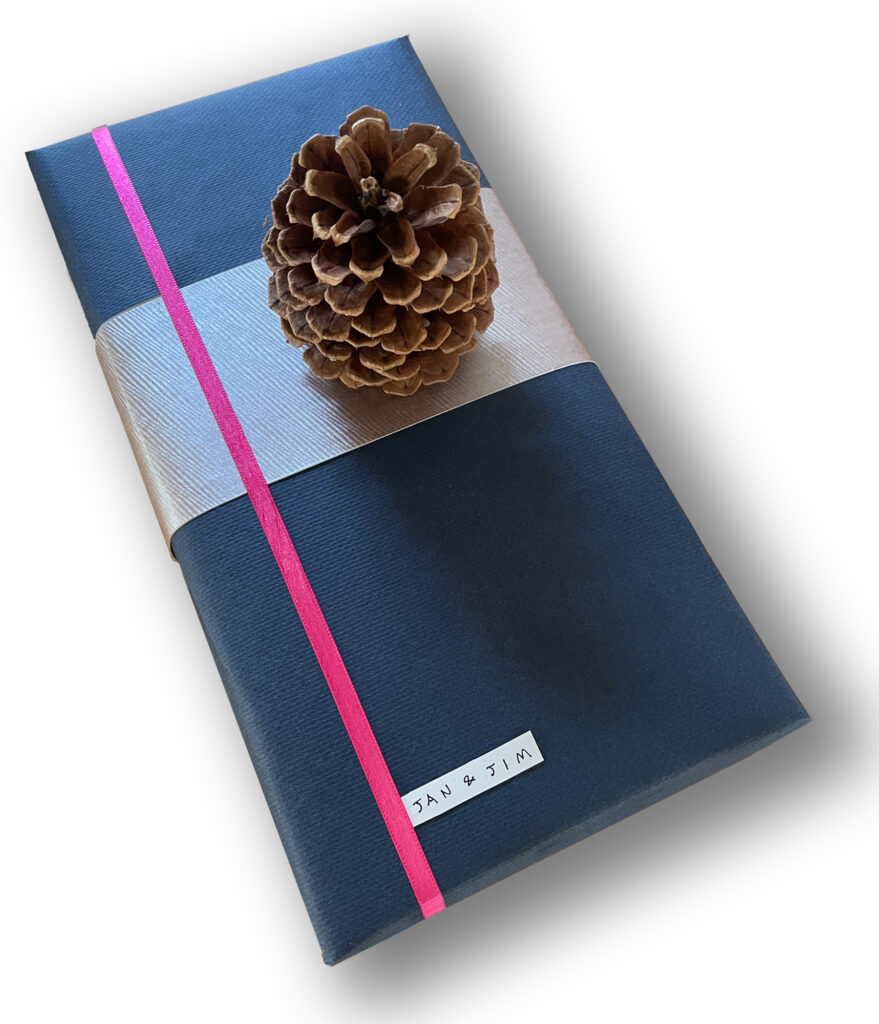
Asymmetrical Pinecone

This wrap demonstrates the practicality of two-piece wrapping. I had two pieces of the blue paper. Neither piece was large enough to cover the present’s box. I wrapped the two pieces on either end of the gift’s box, with traditional folds on the ends. That left a raggedy unwrapped section in between the two blue sections. Following the protocol of two-piece wrapping, I covered that messy area with a wide band of thick silver paper. Its metallic texture contrasted nicely with the non-glossy texture of the blue paper. I positioned this band so that its lower edge aligned with the vertical middle of the gift box, creating a blue square on the bottom and a half-silver half-blue square on top..

I had planned that this wrap would feature a pine cone. I had just picked up four freshly fallen cones during a recent and very windy hike in the foothills. Before I glued the cone in place I studied the possibilities of placement for the magenta ribbon. I avoided centering it. Instead, I picked a location for the pine cone to right and then placed the ribbon centered between the cone and the left side of the package. 

The last step was to make and place a tiny name tag for the recipients. They are custom shaped and made be an integral part of the design.

Shopbag Style

shop bag wrap

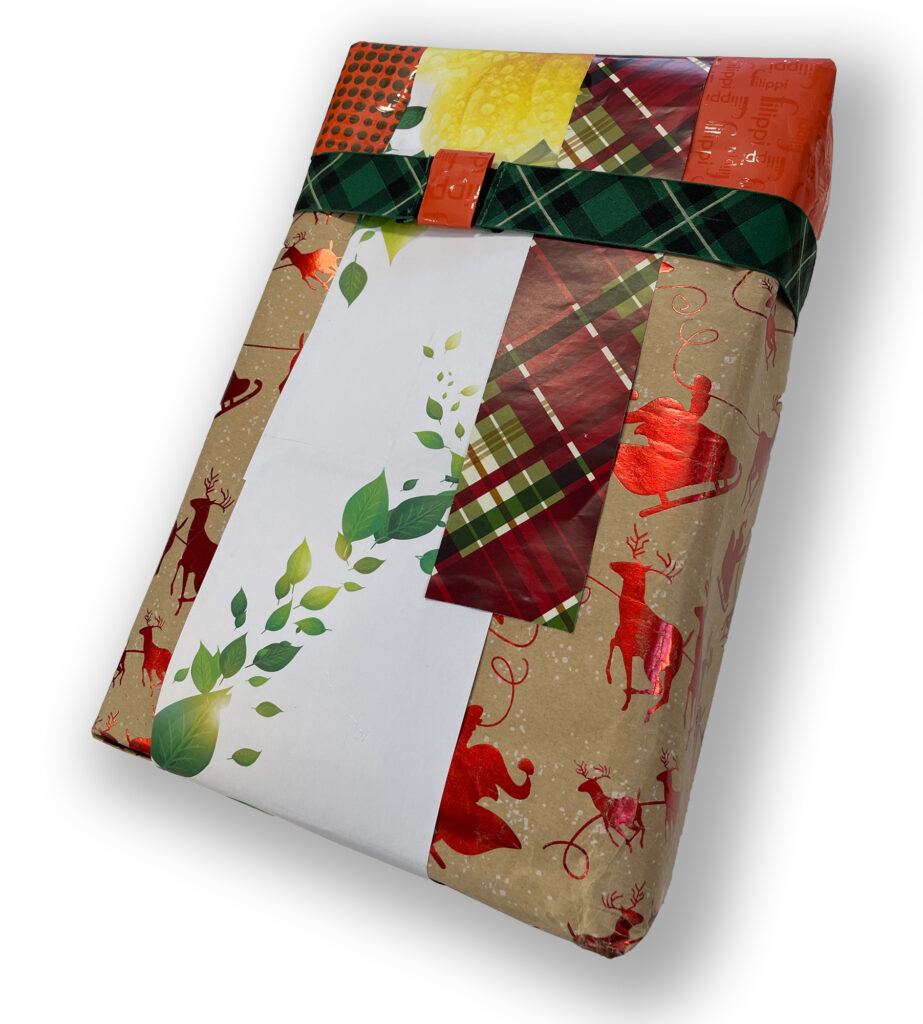
I had been cleaning up the wrap closet and discovered we have an inordinate number of shopping bags. I thought I would start using them as a wrapping-paper resource. The paper in these bags is a bit stiff compared to wrapping paper. So it calls for different tactics. In this case I added the silver floral paper first and gave it a nice angle. Then I picked up the red bag from Pasticceria Filippi’s awesome panettoni. As I held up the big slice of red bag against the gift box, trying various ways to place the papers, and considering whether or not to reveal the logotype, I came to notice the white bag handle. I decided I wanted to keep the handle on, and keep this utilitarian detail up-front. It was not to used as a handle, but rather to refer to concept of “shopping bag” even as the bag was being repurposed from transport to wrap. I hung a name tag on the handle and I was done.

Bionic Collage

wrap art anthony

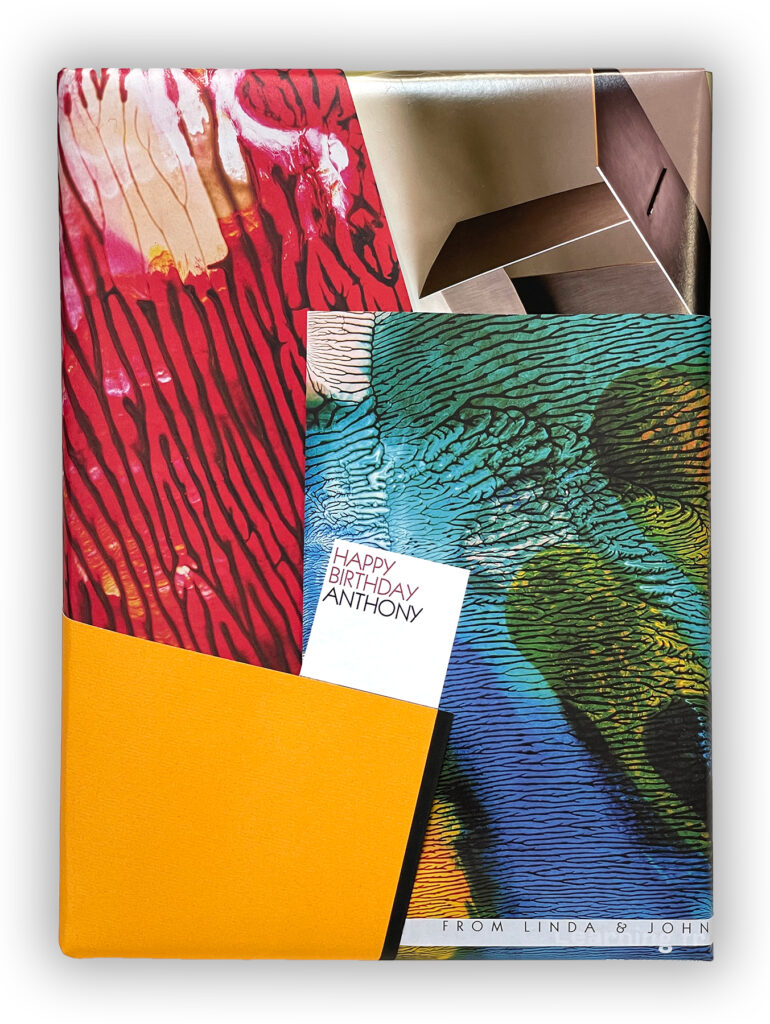
I had clipped some pages from issue 170 of the Yale Medicine Magazine recently, pages with lovely images that appeared to made by layering paints or inks and then laying other papers on top of that color and then lifting them up to create complex, organic-looking patterns. The results were great. After underwrapping the box I added the red page to the upper left corner, wrapping it around the corner. Then I added a photo from a design magazine in the upper right corner. Next I applied the green/blue page and wrapped it around the lower right corner. I added the yellow corner, the cover of a brochure I had designed for a client many years ago. It came with a thick black stripe. I made the gift label in Illustrator, cut it and glued it onto the wrap, aligning its right edge with the left edge of the black stripe.

Triangles

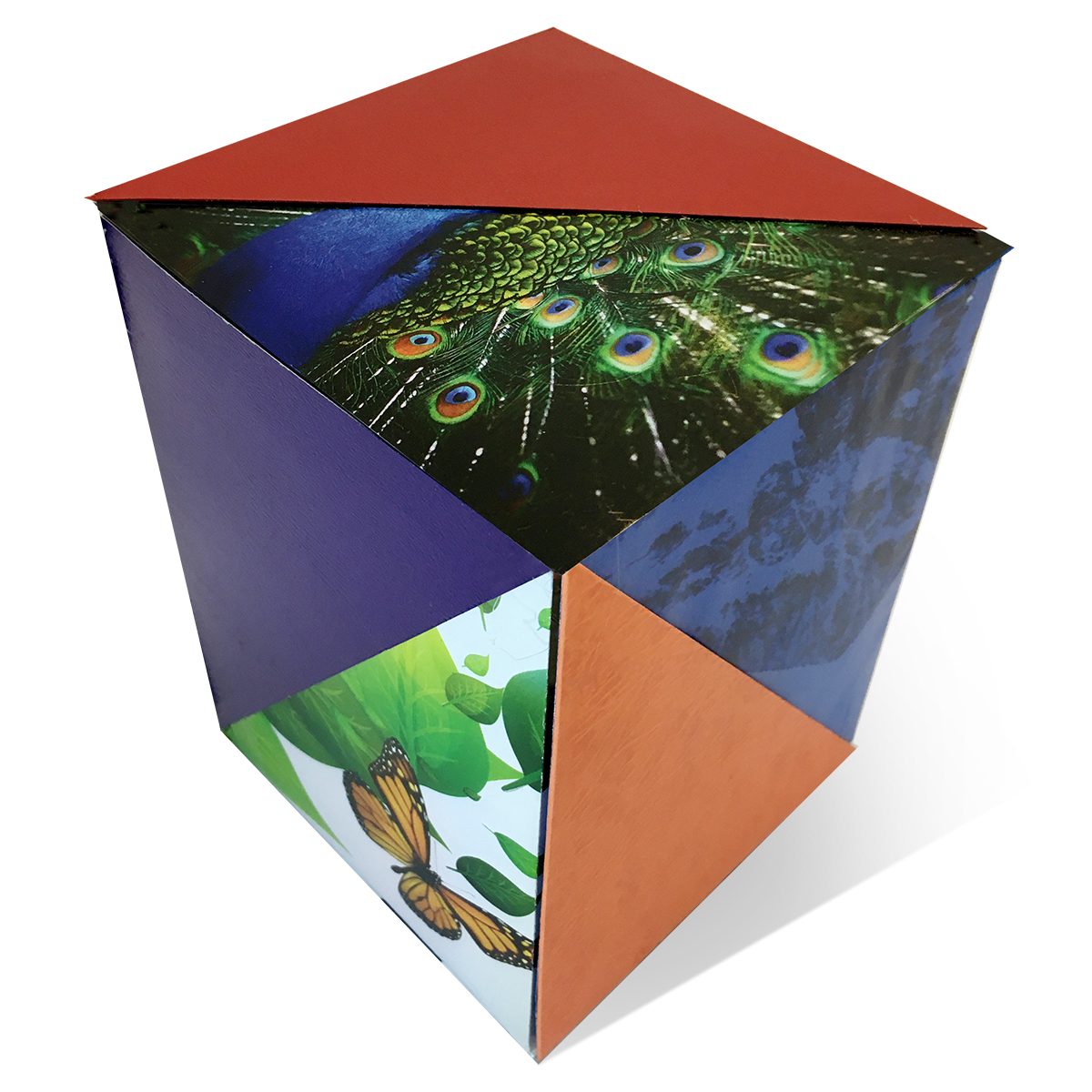
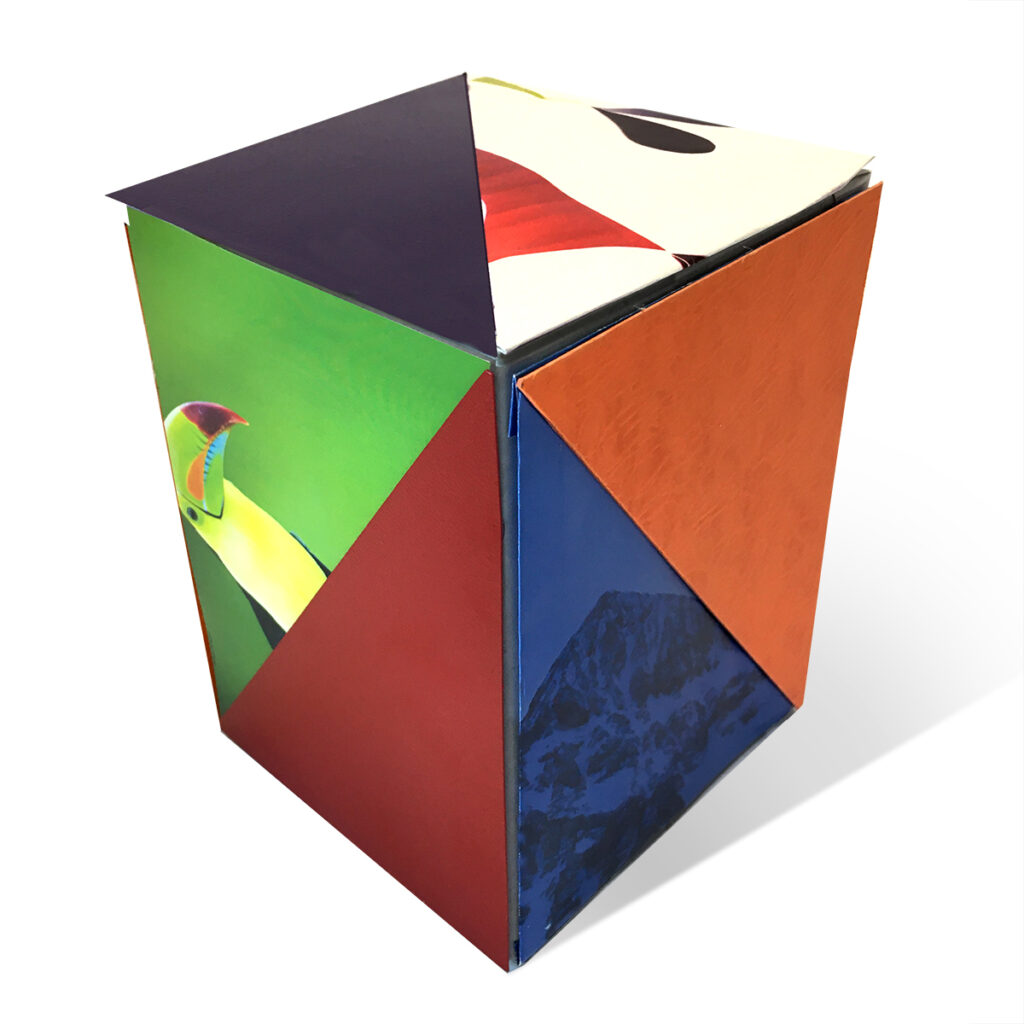
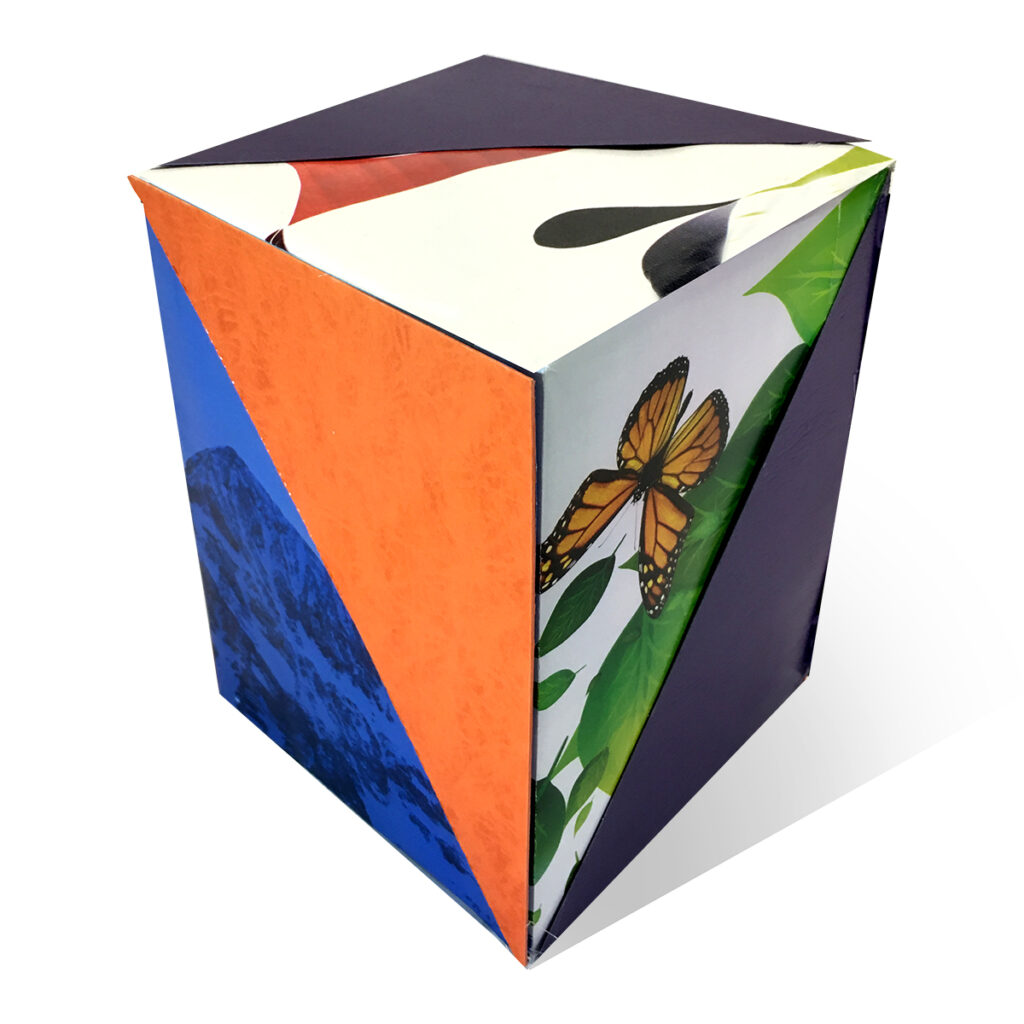
This is an example of accretive wrapping. It starts with a “base coat” of plain paper, applied in the traditional way: a single piece of paper wrapped, with two folded ends.. The first layer of accretion consists of six separates rectangles of imagery taken from magazines and marketing literature.. I cut them out to fit the six sides of the gift box, gluing or double-taping them onto the base wrap. Then I cut and fitted six triangles of stiff paper from printer’s paper samples. These are all glued on the image layer. The wrap can rest on any of the six sides. All views of this wrap are good.

2square Mag Collage

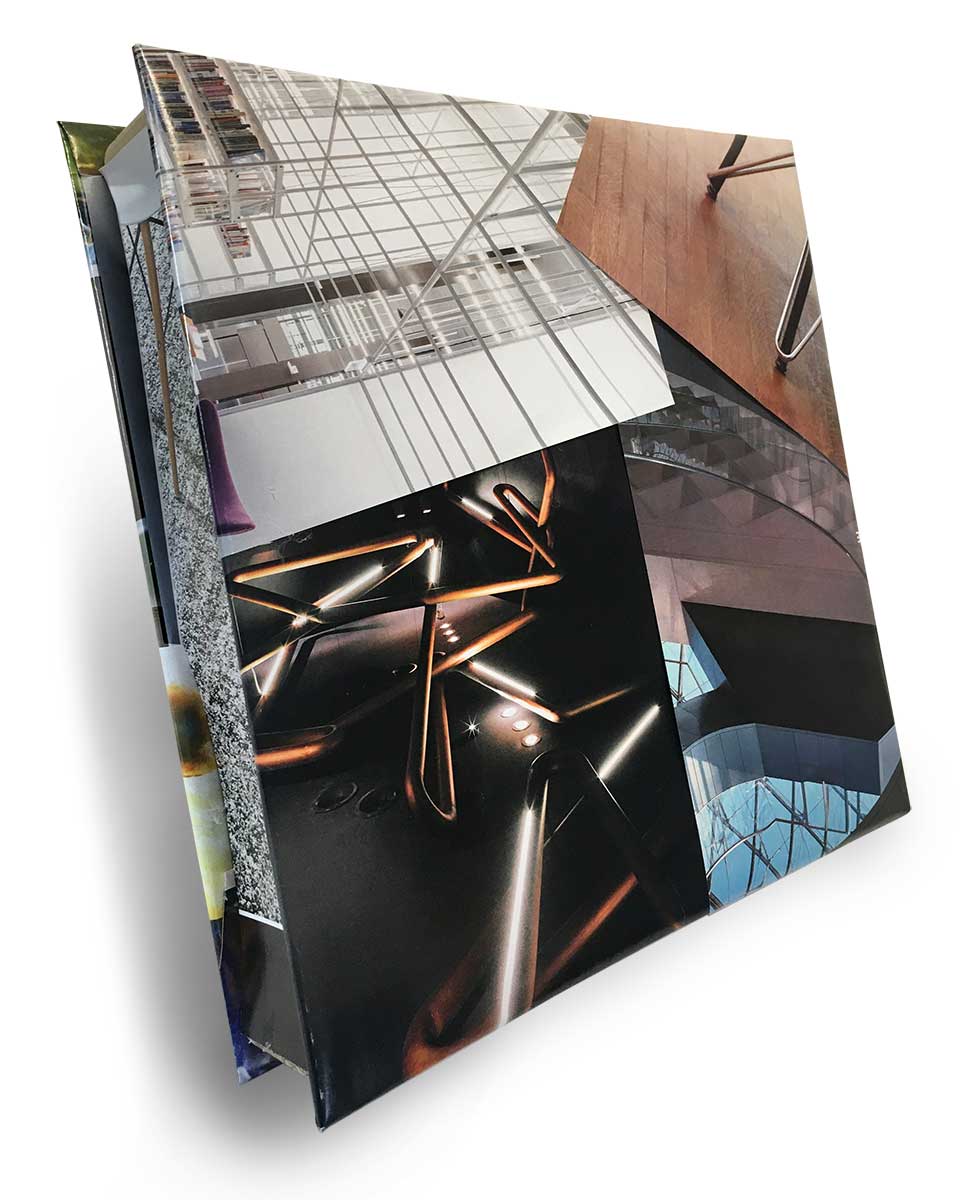
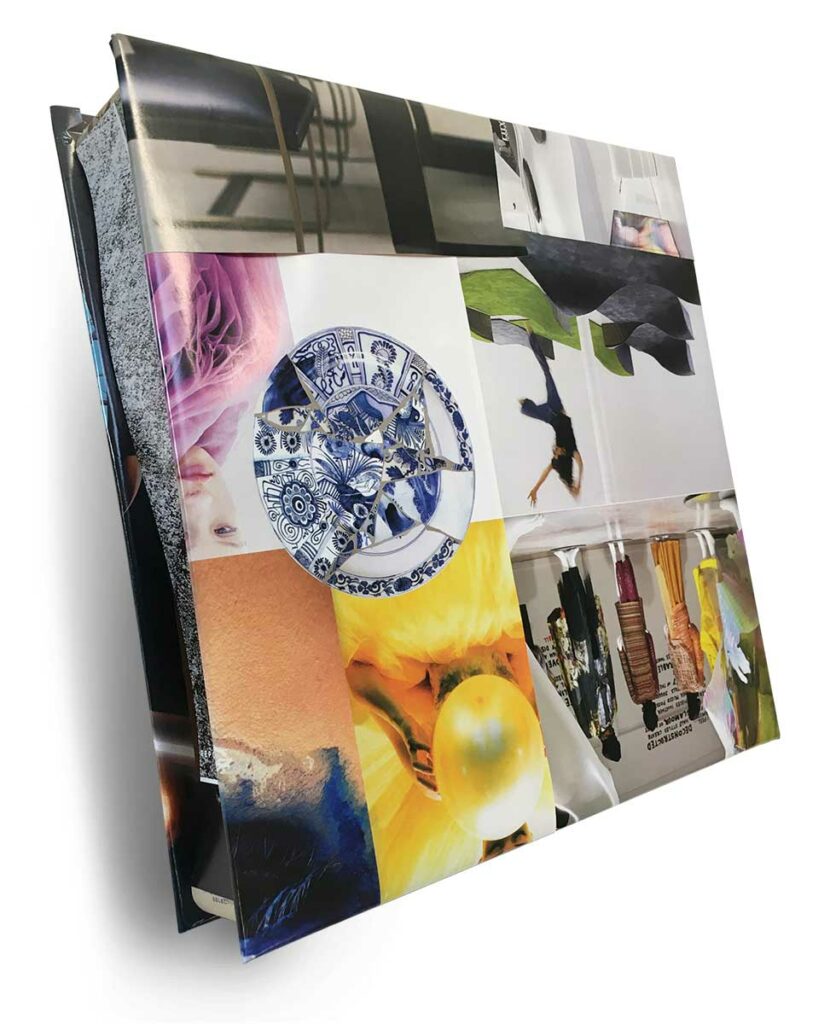
I decided it would be quicker to pack this gift between two squares of corrugated cardboard, than to cut out a custom box. My plan uses corks as pillars to create the space for the gift after creating the two square collages. I covered the two squares with paper from a large design magazine whose ads and special features provided a variety of engaging textures. I used my hot glue sparingly and assembled the collages speedily, wrapping the around the edges of the squares.

I used seven corks to separate the squares. Where the eighth cork would have gone along the middle of one side, I left open space, to ease the retrieval of the gift. To keep the gift from rattling around inside and ripping open the paper walls I planned to glue around the edges of the wrap, I hung the gift inside using three lightly-glue corks, placed strategically in the interior. Then I closed up the wrap with four pieces of cover stock pages, cut to the height of the corks. They are glued to the corner corks. One corner has a “pull open here” sticker placed to guide the recipient in un-wrapping.

It looks like a large picture book, except that there is no spine.